
Specialized AI for Incident Analysis
Automatically investigates your Linux servers in a read-only way, saving hours of manual log and stack-trace analysis.
Works with the infrastructure you already run
Thorough analysis without the deep dive
Fawdy uses SSH to connect to your servers, reads logs, traces processes, and delivers a real diagnosis — all while you focus on other things.
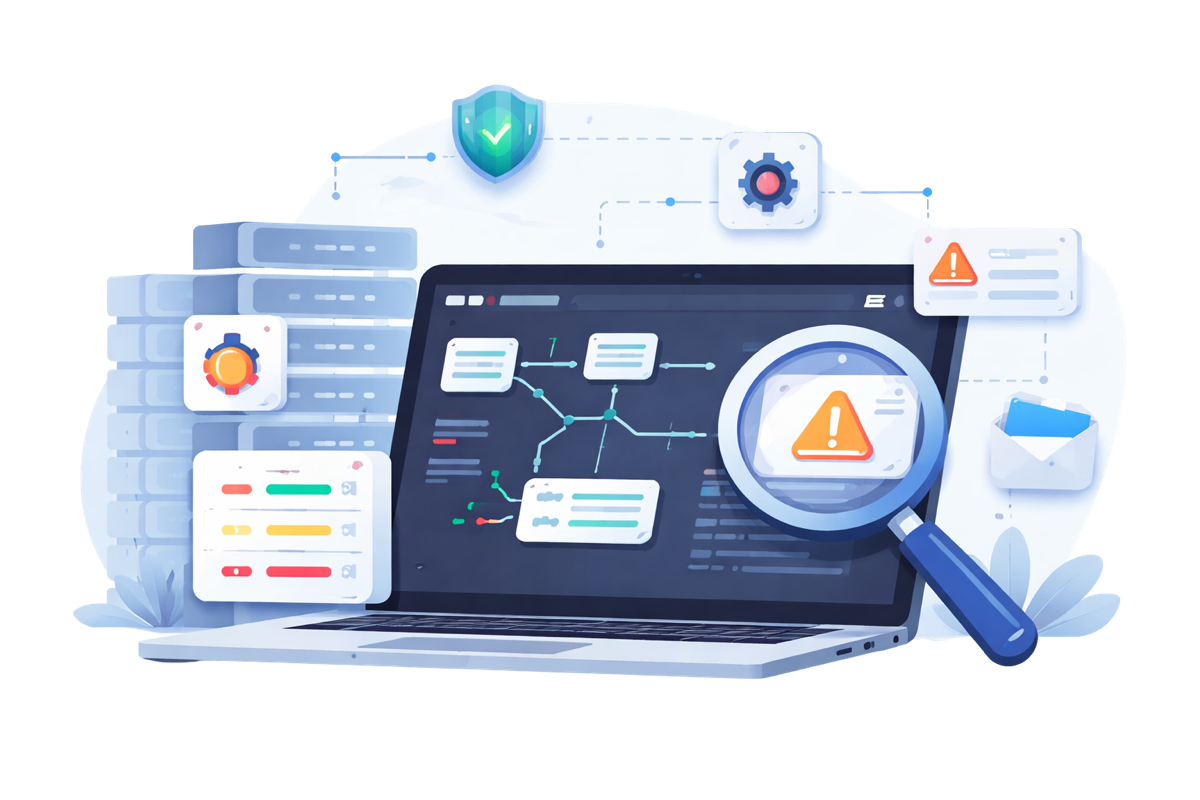
Correlate logs across services
Reads syslogs, journald, application logs, and connects the dots automatically.
Trace processes and connections
Maps what's running, what's listening, and what's talking to what.
Explain in plain English
No wall of terminal output. Get a clear diagnosis you can act on.
Read-only by design
Fawdy observes but never modifies. Your system stays exactly as-is.
Deep investigation for the servers that matter most
Log Correlation
Reads and correlates logs across services to find the actual root cause, not just the symptom.
Safe & Read-Only
Fawdy investigates without modifying your system. No changes, no risk. Just answers.
Plain English Reports
Get a clear writeup of what went wrong, why it happened, and what to do about it. No wall of raw terminal output.
Legacy Friendly
Built for the servers that matter most -- the ones running critical workloads on battle-tested infrastructure that can't just be moved to the cloud.